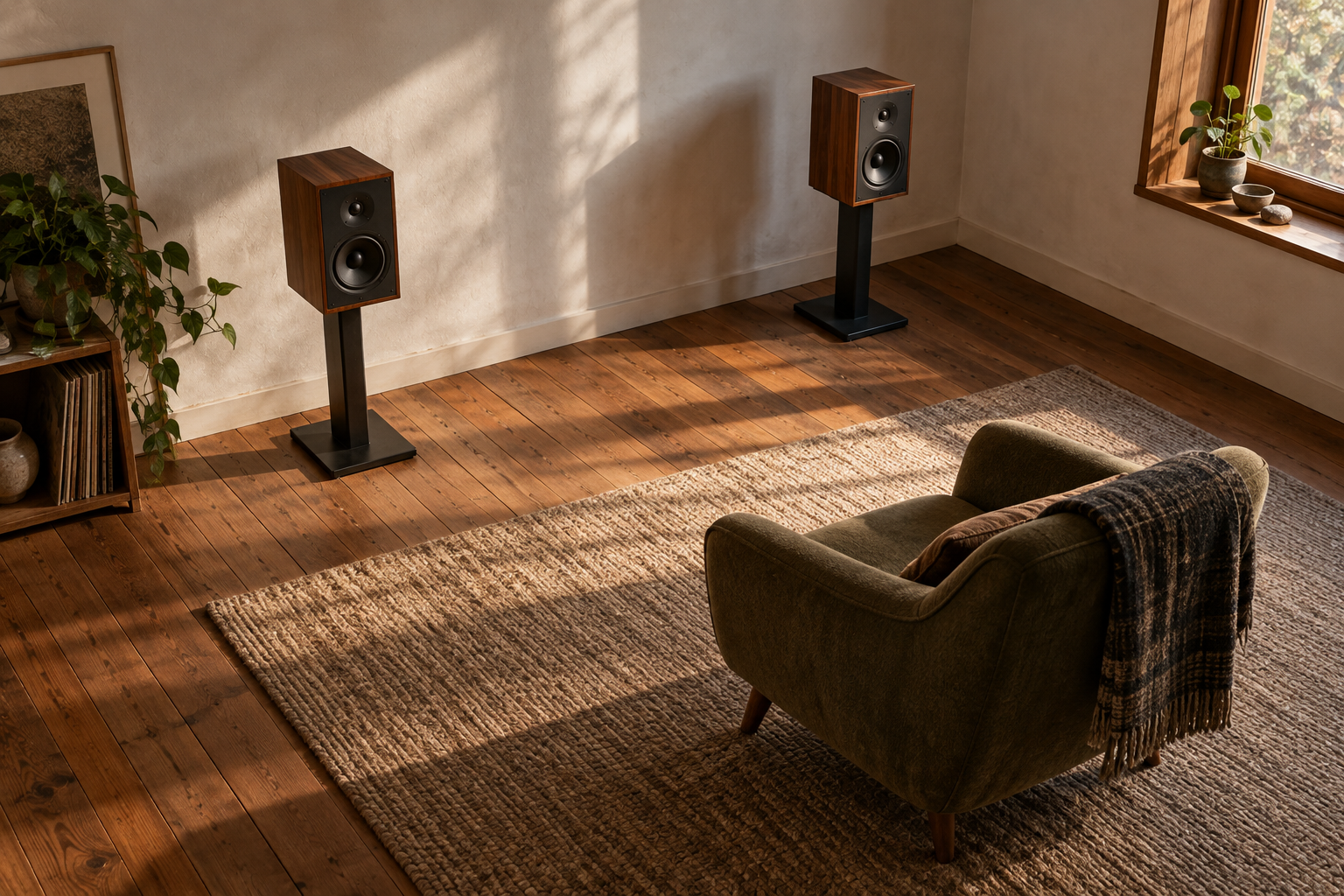
The speakers were positioned with great care. The cables had been discussed. The chair had moved several times. We played a track I knew well, and halfway through I realized I had been talking about the system while missing the music that was passing through it.
This is an easy trap to fall into because equipment gives a conversation solid objects to hold. You can point to a box, a control, a measurement or a price. Listening asks for attention, which is less convenient to display across a coffee table.
The bass line was still there, doing its job while we reviewed the furniture around its delivery.
Follow one part of the arrangement
When I want to hear a familiar song differently, I choose one part and follow it. On that afternoon I chose the bass. I listened for where it entered, what it repeated, when it changed and where it stopped. I did not need a new purchase to perform this modest shift in attention.
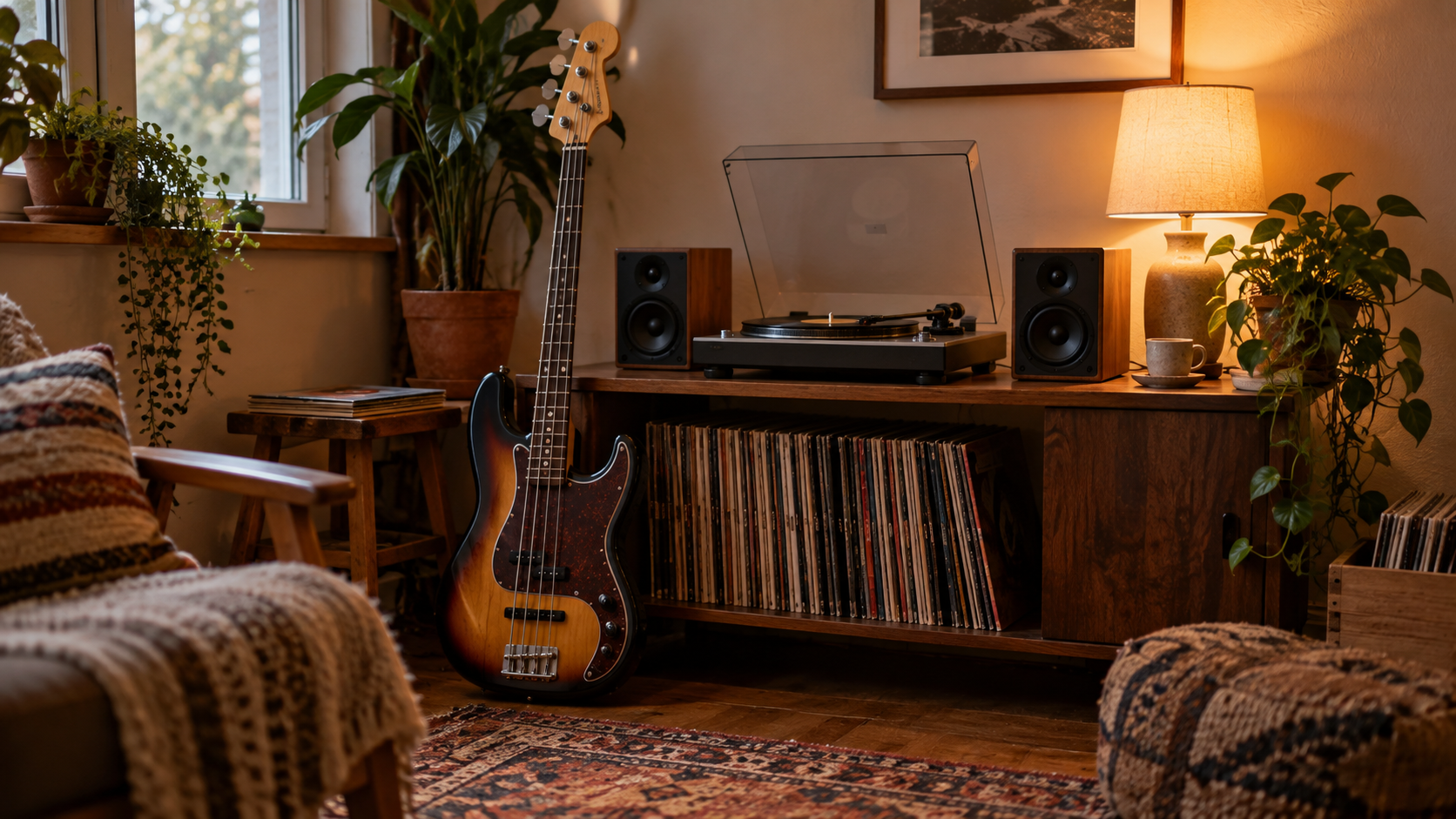
Playing bass with friends has made me interested in the part's relationship to the rest of an arrangement. A line can feel unremarkable on its own and become essential when another part meets it. A pause can create room for something else. Repetition can make a later change more noticeable.
I kept my observations attached to the particular track rather than turning them into universal rules. What I heard in one arrangement might not describe another. The point was to notice a choice someone had made and hear its effect on the whole piece.
Then I listened again without isolating the part. That second pass mattered. An arrangement is not a collection of specimens pinned neatly to a board. The relationship between parts is the music I came to hear.
Let the conversation have a song in it
I enjoy discussing equipment. A well-chosen system can make listening pleasant, and practical problems sometimes need practical changes. The irritation is the assumption that buying becomes the main evidence of caring. A listener with a modest setup is still allowed to hear something interesting.
At the library, people occasionally apologize for the way they listen: old headphones, kitchen radio, a tiny speaker that shares a counter with the kettle. I wish the apology could be retired. There are many ways to make room for music in an ordinary life. Some are technically limited. None automatically cancel the listener's curiosity.
My own room has compromises. Books occupy awkward places, and a chair occasionally hosts laundry instead of a deeply considered listening session. When I can sit down, I try to give the record a recognizable interval of my attention. I also accept that a song heard while cooking can become part of a life in a way a perfect demonstration cannot.
That afternoon with the carefully positioned speakers improved when we stopped explaining them. We let one track finish. Then another. The conversation returned afterward, now containing a detail from the actual arrangement instead of only the objects around it.
I left with a note about the bass line and a renewed interest in the musician who had played it. That felt like a better souvenir than a shopping plan.
Your equipment may be excellent. It may be thoroughly ordinary. Either way, there is a small chance that the most interesting upgrade available tonight is the decision to listen to the part you keep walking past.

A thought worth keeping?